Today's crits start at 9.00 with a brief presentation of the studio and the visiting assessors, Tone Megrunn Berge and Joar Nango, continuing with:
9.15 Kristján: Reorientation, tie up loose ends
10.00 Eimear: Reorientation - Image and Language in Kautokeino
10.45 Joanna: Reorientation in feeding freedom
11.30 Vlad: Living through the landscape
12.15 lunch
13.15 Bowen: Reorientating Biedjovággi
14.00 Ronald: Siida conflicts and sámi reindeer concepts
14.45 Ona: Reorientating the Kautokeino common
15.30 Sun: Farming wetland - Reorientation landscape in Kautokeino area
16.15 Victoria: Temporality of Reindeer Herders Taskscapes
- the whole session is mandatory for all students and open for the public -
Welcome!
Showing posts with label /studio info. Show all posts
Showing posts with label /studio info. Show all posts
2014/03/10

2014/02/16
intro: #4 - reorientations
We'll meet Monday at 9.00 for an intro talk on reorientations and reflections on the text: Part four - Reorientations in for space by Doreen Massey.
If you really were to take a slice through time it would be full of holes, of disconnections, of tentative half-formed first encounters. 'Everything is connected to everything else' can be a salutary political reminder that whatever we do has wider implications than perhaps we commonly recognise. But it is unhelpful if it leads to a vision of an already constituted holism. The 'always' is rather that there are always connections yet to be made, juxtapositions yet to flower into interaction, or not, potential links which may never be established. Loose ends and ongoing stories. 'Space', then, can never be that completed simultaneity in which all interconnections have been established, in which everywhere is already (and at that moment unchangingly) linked to everywhere else.
If you really were to take a slice through time it would be full of holes, of disconnections, of tentative half-formed first encounters. 'Everything is connected to everything else' can be a salutary political reminder that whatever we do has wider implications than perhaps we commonly recognise. But it is unhelpful if it leads to a vision of an already constituted holism. The 'always' is rather that there are always connections yet to be made, juxtapositions yet to flower into interaction, or not, potential links which may never be established. Loose ends and ongoing stories. 'Space', then, can never be that completed simultaneity in which all interconnections have been established, in which everywhere is already (and at that moment unchangingly) linked to everywhere else.
2014/02/07
there are (still) no maps for these territories
The talk on industrialised and urbanised tundra landscapes in Kola takes place Friday February 7 at 9.00 - see you!


2014/02/03
assignment: #3 - vulnerability
Add a layer to your investigations dedicated to vulnerability - of what you find specially important and at the same time vulnerable; to change, extinction, destruction, alienation, loss.... or ...
The notion of vulnerability is inevitably related to the concept of life - either it is human life or life in nature as such. The consciousness of mortality is disturbing and exposes life as fragile. Life does not exist in closed systems, but do always relate to other life forms or systems of varying extent and size - in these relations dependency occur, and not least a continuous struggle for a position. It is a slow drama that has been going on since the creation of earth, and encompasses all natural systems of all scales from the smallest biotope to global circuits.
/M+G
The notion of vulnerability is inevitably related to the concept of life - either it is human life or life in nature as such. The consciousness of mortality is disturbing and exposes life as fragile. Life does not exist in closed systems, but do always relate to other life forms or systems of varying extent and size - in these relations dependency occur, and not least a continuous struggle for a position. It is a slow drama that has been going on since the creation of earth, and encompasses all natural systems of all scales from the smallest biotope to global circuits.
/M+G
2014/02/01
#3 - vulnerability
See you all Monday morning at 9.00 for a lecture on process & actors in the northern landscapes with Nils Tokheim.

Weekplan #3 - vulnerability as pdf.

Weekplan #3 - vulnerability as pdf.
2014/01/25
weekplan update #2 - the commons
See you all Monday morning at 9.00 for a discussion on your commons assignment so far (part I) - and how to proceed (part II)!

Weekplan #2 - the commons as pdf.

Weekplan #2 - the commons as pdf.
2014/01/20
assignment: #2 - the commons
Use your knowledge about the commons and the complexity of CPR management to:
Find the action arena, locate the action situation and define the participants/actors.
Define the actors’ role(s), and put them in context.
Add narratives of both human and non-human caractere - and expand the perspective beyond the horizon.
Find the action arena, locate the action situation and define the participants/actors.
Define the actors’ role(s), and put them in context.
Add narratives of both human and non-human caractere - and expand the perspective beyond the horizon.
Construction of North
Landscapes come down to us thick with the sediments of culture. In other words: Landscapes and territories are cultural products. Our conception of them is formed by image building, values, rhetorics, and politics. All of these have contributed strongly to conceptions of the Arctic through time, from ancient myths of Thule, through myths of exploration, to present days arguments for exploitation and preservation. This seminar invites local and international researchers and experts to explore the agency of imagery in a changing Arctic.
As large areas in the Arctic and Sub Arctic are being turned over into extraction territories, energy spaces and landscapes for tourism activities, stories and mythologies about the north continue to build. The new industries that are gaining foothold in Arctic territories are working within a certain framework of conceptualized understanding of the north as a new commodified landscape. On the other hand, social research brings forth knowledge from local practices as well as the human scale and social aspects of a region in rapid change. Mapping techniques contribute at the same time to render a more diverse and valid image of traditional landscapes, allowing for an extended and novel understanding of them.
 This 2014 side-event to the Arctic Frontiers conference, arranged by the Tromsø Academy of Landscape and Territorial Studies, discusses the construction of landscapes, social conditions and imagery in the Arctic. Different construction strategies will be discussed by a wide range of scholars:
Janike Kampevold Larsen, William L. Fox, Johan Schimanski, Stepa Mitaki, Kathleen John-Alder, Aileen A. Espiritu, Stine Barlindhaug, Silje Figenschou Thoresen, Arvid Viken, Larissa Riabova, Vladimir Didyk and Andrew Morrison.
Program as pdf.
For info on the main conference please see www.arcticfrontiers.com/
As large areas in the Arctic and Sub Arctic are being turned over into extraction territories, energy spaces and landscapes for tourism activities, stories and mythologies about the north continue to build. The new industries that are gaining foothold in Arctic territories are working within a certain framework of conceptualized understanding of the north as a new commodified landscape. On the other hand, social research brings forth knowledge from local practices as well as the human scale and social aspects of a region in rapid change. Mapping techniques contribute at the same time to render a more diverse and valid image of traditional landscapes, allowing for an extended and novel understanding of them.

Janike Kampevold Larsen, William L. Fox, Johan Schimanski, Stepa Mitaki, Kathleen John-Alder, Aileen A. Espiritu, Stine Barlindhaug, Silje Figenschou Thoresen, Arvid Viken, Larissa Riabova, Vladimir Didyk and Andrew Morrison.
Program as pdf.
For info on the main conference please see www.arcticfrontiers.com/
reminder: #2 - the commons
A reminder of the design principles derived from case studies of long-lasting systems of common-pool resource
governance:
Clearly defined boundaries. The boundaries of the resource system and the individuals or households with rights to harvest resource units are clearly defined.
Proportional equivalence between benefits and costs. Rules specifying the amount of resource products that a user is allocated are related to local conditions and to rules requiring labor, materials, and/or money inputs.
Collective-choice arrangements. Many of the individuals affected by harvesting and protection rules are included in the group that can modify these rules.
Monitoring. Monitors, who actively audit biophysical conditions and user behavior, are at least partially accountable to the users and/or are the users themselves.
Graduated sanctions. Users who violate rules-in-use are likely to receive graduated sanctions (depending on the seriousness and context of the offense) from other users, from officials accountable to these users, or from both.
Conflict-resolution mechanisms. Users and their officials have rapid access to low-cost, local action situations to resolve conflict among users or between users and officials.
Minimal recognition of rights to organize. The rights of users to devise their own institutions are not challenged by external governmental authorities, and users have long-term tenure rights to the resource
Nested enterprises. Appropriation, provision, monitoring, enforcement, conflict resolution, and governance activities are organized in multiple layers of nested enterprises.
(Ostrom 1990, 2005)
 Weekplan #2 - the commons as pdf.
Clearly defined boundaries. The boundaries of the resource system and the individuals or households with rights to harvest resource units are clearly defined.
Proportional equivalence between benefits and costs. Rules specifying the amount of resource products that a user is allocated are related to local conditions and to rules requiring labor, materials, and/or money inputs.
Collective-choice arrangements. Many of the individuals affected by harvesting and protection rules are included in the group that can modify these rules.
Monitoring. Monitors, who actively audit biophysical conditions and user behavior, are at least partially accountable to the users and/or are the users themselves.
Graduated sanctions. Users who violate rules-in-use are likely to receive graduated sanctions (depending on the seriousness and context of the offense) from other users, from officials accountable to these users, or from both.
Conflict-resolution mechanisms. Users and their officials have rapid access to low-cost, local action situations to resolve conflict among users or between users and officials.
Minimal recognition of rights to organize. The rights of users to devise their own institutions are not challenged by external governmental authorities, and users have long-term tenure rights to the resource
Nested enterprises. Appropriation, provision, monitoring, enforcement, conflict resolution, and governance activities are organized in multiple layers of nested enterprises.
(Ostrom 1990, 2005)

2014/01/14
mapping lecture - wednesday 9.00
Just a reminder that we start tomorrow, Wednesday, at 9.00 with a mapping lecture - consultations afterwards - see you all!
/M+G
/M+G

2014/01/13
Finnmarksvidda as an action area - Jan Åge Riseth
In addition to the text, Sustaining the commons, you here have the slides from Jan Åge Riseth to prepare for the lecture and seminar Friday:
slides
Jan Åge suggests you also bring a print of the handouts as support during the lecture and discussion:
handouts
slides
Jan Åge suggests you also bring a print of the handouts as support during the lecture and discussion:
handouts
2014/01/03
#1 - field work
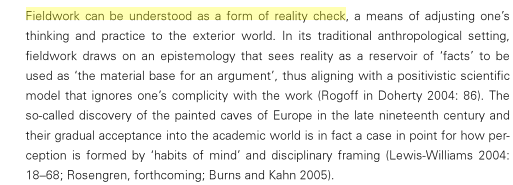
The quote is from one of the texts you have received, Inside the cave, outside the discipline by Catharina Gabrielsson (Architecture and field/work, 2011).
For your first assignment we want you to keep awareness of the concepts of reality check, complicity with the work as well as your habits of mind, and bring back one observation/reflection for every day of the trip (6-10 January) in the form of a (short) text illustrated by photo/drawing/graphics.
You will have the week after the trip to work on the assignment, entitle it and put it together as a booklet or poster (or other). Your work should be uploaded to this blog, preferably as a pdf embedded via issuu, no later than Thursday January 16, labelled with your name and the assignment title #1 - field work (picked from the label list).
/M+G
Finnmark field work
The studio starts with an intriguing trip to experience the immersive atmosphere of the dark and cold winter on the Finnmark plateau. We will meet the actors in the landscape and analyze the potential conflicts in these contested territories.
The silent knowledge from traditional reindeer husbandry is confronted by the global demand for minerals, and the physical impact of the mining industry. We will investigate beyond the obvious and seek out knowledge that is not so easily accessible, and we will trace the tracks of money connected to global powers and economies.
Basically is the value of the landscape as a common renewable resource at risk. The studio objective is to act as landscape architects in a situation where the historical landscape can be transformed into a complete new reality, and where its traditional agents of humans and animals can be displaced.
 Weekplan #1 - field work as pdf.
best
/G+M

best
/G+M
2014/01/02
Enter Biedjovággi
Welcome to the TACL winter studio, Focal Point Biedjovággi!
Sun, Joanna, Bowen, Vlad, Eimear, Victoria, Kristján, Ronald & Ona Katrina - we are happy to enter the landscape together with you, starting Monday..
Here is the preliminary studio timeline (NB! updated January 6):
 Timeline as pdf.
best
/M+G
Sun, Joanna, Bowen, Vlad, Eimear, Victoria, Kristján, Ronald & Ona Katrina - we are happy to enter the landscape together with you, starting Monday..
Here is the preliminary studio timeline (NB! updated January 6):

best
/M+G
2014/01/01
Focal Point Biedjovággi
Northern landscapes and territories are to an increasing degree exposed to strong economic and political interests, working to achieve ownership, exclusive rights and definition power in territories that are carriers of complex stories and tacit knowledge.
Focal point Biedjovággi will relate to the critical debate on the development of Northern landscapes and aims to be a platform for experimental approaches to the landscapes. In the latent conflict of mining in Biedjovàggi the interests of the different
landscape actors are in fierce conflict, and the studio will discuss to what extent this opposition can be negotiated.
Through introductory and thematic investigations projects will be developed and defined at different scales, and will shed light
on contradictions and interests in the landscape, also through design solutions.
Through theoretically and visually informed thematic investigations, the students will define their own project
assignments. These will be generated both by individual and collective experiences. The assignment will process findings at
different scales and will shed light on differences and interests in the landscape.
Texts, essays and articles by, among others, Doreen Massey (for space), Elinor Ostrom (Governing the Commons), Deleuze
& Guattari (Rhizome - A Thousand Plateaus) and Bruno Latour (We have never been modern) will be studied and discussed.
Invited local and international guests and experts will contribute under the themes of field work, the commons, vulnerability and reorientation.
/G+M

 If you want to print, cut and fold your own booklet you can download the pdf here:
/G+M


Subscribe to:
Posts (Atom)